


Taking your first medal test – ‘A student’s guide’ by Laurie Yates (Fellow & Examiner of I.S.T.D.)
Feeling apprehensive? Your first medal test might be the start of a fulfilling journey to enhance your Ballroom and Latin dancing skills more effectively.
FROM FEAR TO A SENSE OF ACCOMPLISHMENT
For many dancers, the thought of taking a dance medal test can be quite daunting. Perhaps some of these people, who love dancing socially and enjoy the process of learning in their classes or private lessons, feel that a medal test means taking their dancing a little bit too seriously, which may take the fun out of something they love as a hobby. Others may feel that the experience will be so nerve-wrecking that they will probably forget their routines or become too nervous to even take the floor. A comment I’ve heard more than once is: ‘Why would I want to put myself through that?’
Well, first off, I can totally appreciate those fears and a reluctance to participate but with full knowledge of what to expect and the correct preparation, it really doesn’t have to be like that and in fact, most dancers feel afterwards that it was a rewarding and valuable experience.
BECOME A BETTER DANCER
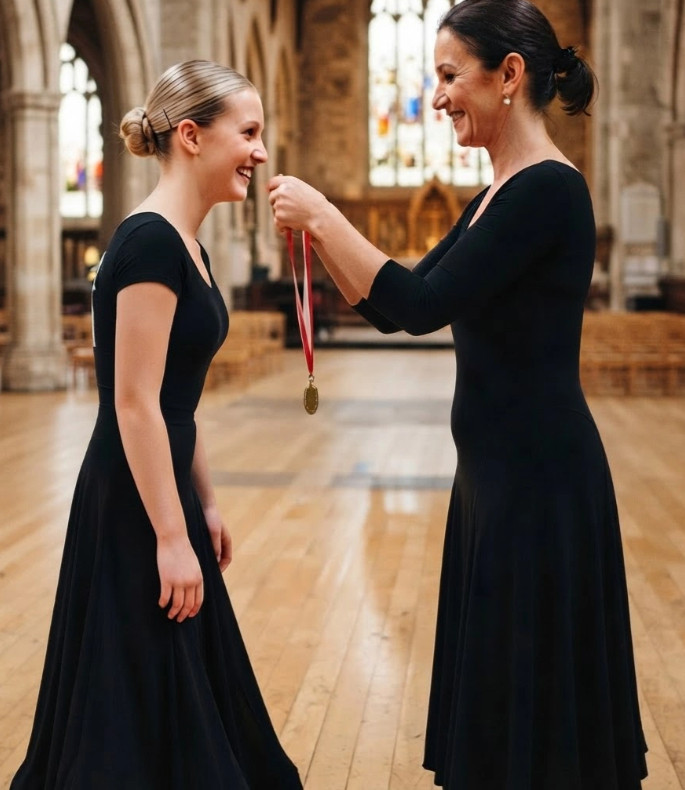
Successful participants often feel a great sense of achievement in their dancing and take pride in receiving their medal and certificate. For me, the value of a medal test is quite simple: it’s an incentive to become a better dancer! A future medal test leads to an action plan, it gives structure and goals to learning, together with a time frame to achieve them, meaning that things get done and progress is made.
THE FIRST LEVEL
The first level of exam on the ladder is a Social Dance test, meaning that a candidate who passes this exam would need to be a competent social dancer. Two dances are required for the ‘Social Dance Test 1’ exam and moving forward, it is advisable to take all dances at that level before moving on to the next level, which is pre-bronze. The pass mark is 65% with a ‘Commended’ level pass awarded to those achieving 75 -85% and ‘Honours’ to 85% and above. In a two-dance test, the marks for each dance are added together and divided by two to obtain the level achieved.
WHAT HAPPENS ON THE DAY
If there are enough students taking part, the medal test day will be ‘live’, meaning that the examiner will be present in the room. When there are smaller numbers of students, the session will be recorded, and the examiner will assess the performance remotely on the following day. The students will enter the room with their teacher or dance partner, who will dance with them for the test, and aside from the examiner and possibly someone operating the music system, no one else will be present in the room. In most cases, the pupil dances with their teacher and this is considered the best option, as they are familiar with dancing with their teacher and will therefore be most confident in that situation. However, a couple taking lessons together with their teacher have the option to dance together on the day, with the added option to be marked as individuals or as a couple, meaning that the same marks and comments will be given to both partners.
WHAT TO WEAR
One question, that is often asked by pupils is that of ‘What to wear for the medal test?’ In answer to this question, I would say that a well-presented candidate always gives the best first impression, but also, suitable clothing can enhance your performance and allow you the freedom to dance at your best.
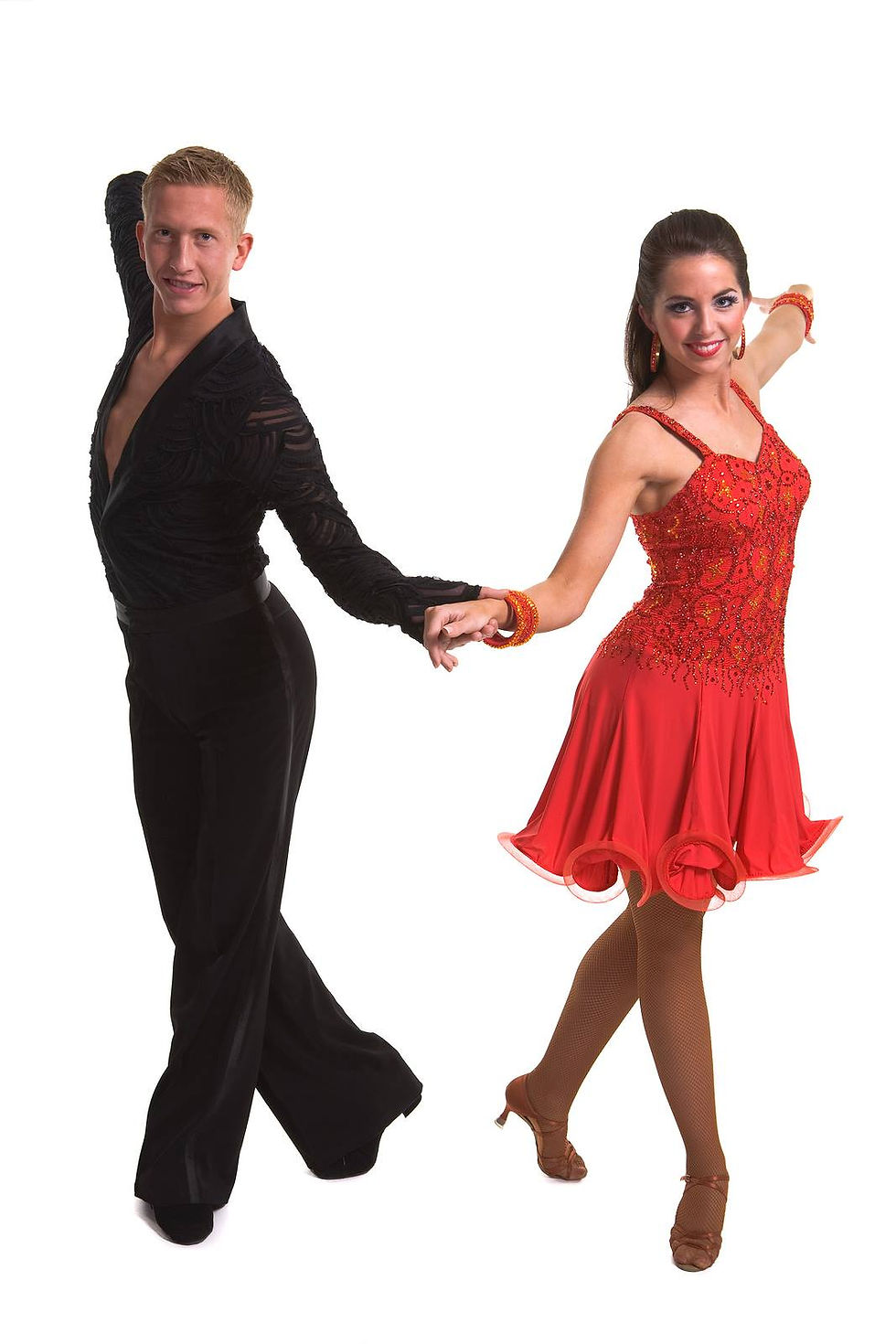
The most important item is a good quality pair of dance shoes which are clean and in good condition. Aside from that, there is no need to invest in any specialist dancewear unless you choose to do so. For men, a smart white or black shirt is ideal that fits well on the shoulders with not too much excess material, paired with smart black trousers and a belt. Although it is not a requirement, I would suggest a tie for the ballroom dances with an optional waistcoat. For the ladies, I would recommend a dress or skirt that allows freedom of movement when dancing and is of a length that the feet and ankles are visible to the examiner. A short skirt may be worn for the Latin dances and ladies may also wear stylish trousers if they would prefer. Of course, as dancers progress to higher level exams, they often purchase dancewear that allows a greater freedom of body movement.
PREPARATION
Hopefully this gives a clear idea of how the medal test day will run so in preparation, develop your confidence by listening to your teacher and putting into practice what they have said. Regular lessons and rehearsal over time are much more valuable to success than a shorter intensive study. Rehearse your routines so you can dance them on ‘auto-pilot’ and finally, aim to achieve the best possible quality of timing and footwork that you can at the stage that you are at.
As a final word, I would like to add that, despite all the preparation, it may well be that on the day, the student still feels a little apprehensive or nervous and if that is the case, my advice is to accept that you are nervous, put it mentally to one side and focus on the task. A little bit of nervousness is a good thing; it shows a student’s passion for dance and their desire to do well.

The author
Laurie Yates, Fellow & Examiner of the ISTD, coach, dance teacher, based in London, UK. Former semi-finalist at the international Professional Ballroom Championships at the 'Open to the World' in Blackpool and at the 'International' at RAH, London.
Contact London Dance Studio to enquire about medal tests, private lessons and workshops with Laurie.
Comments